Browse the Workbench to See all Case Studies & Insight Articles
Quiet proof pieces and practical articles for homestead and small-ranch brands.
How a simple monitoring system helped a family-run dairy catch problems earlier and steady the work.
Let’s Talk About Your Next Customer Story
Author: Ken Whaley
Published: November 24, 2025
Focus: Family dairy, heat detection, early-warning herd health
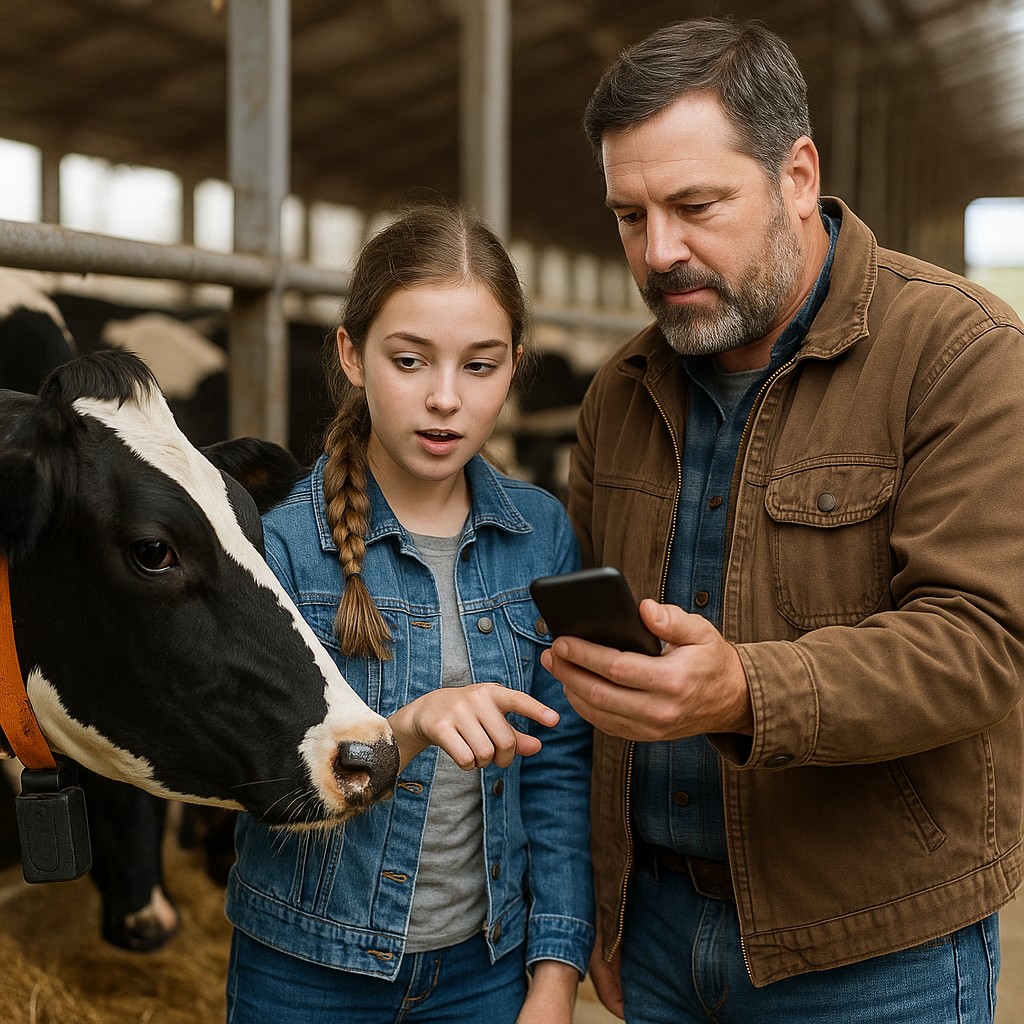
Tom Kendrick has spent the better part of thirty years running Homestead Ridge Dairy, a 240-cow family operation tucked between two ridgelines and next to a winding creek. He knows his herd the way most men know their well-worn hand tools: by feel, by rhythm, by the tiny signs that only show up when you work with animals long enough to understand them.
But over the past few years, as the herd slowly grew and the kids took on more of the daily chores, those signs had gotten harder to keep up with. There were more cows to watch and more small details than even the three of them could reliably catch, even with the kids stepping up.
“It wasn’t anyone’s fault,” he said. “There were just more moving parts than the three of us could stay ahead of.”
For the Kendricks, the biggest strain came from missed heats; cows staying open too long, calving later than they should, and throwing the whole production cycle off balance. Tom walked the alleys at least twice a day, just like he always had, watching for restlessness, mounting, or that change in posture that meant a cow was ready. But with a growing herd and only so many experienced eyes, things slipped.
Add to that a stretch where a couple of cows went off feed and weren’t caught early, and the pressure built. Vet bills crept up, milk dipped here and there without a clear pattern, and the farm’s routine — once predictable — turned into a series of small, nagging surprises.
“It felt like we were working harder and falling further behind,” Tom said. “The cows weren’t doing bad,but they weren’t doing great either.”
One cold week in January tipped the balance.
A promising first-calf heifer came up open on her preg check; a heat Tom was sure he should’ve caught. A fresh cow dropped in rumination without anyone noticing until the following morning. And the milk tank showed a dip that didn’t match anything they could put their finger on.
It wasn’t a crisis. But it was a breaking point.
That night after supper, Tom sat at the kitchen table rubbing his temples and looking over the herd notebook. His daughter, Emily, who’d taken on more responsibilities around the farm, recognized the look.
“Dad… you okay?”
“I’m fine. Just tired of guessing,” he said. “Feels like we’re always reacting instead of getting ahead.”
Emily hesitated, then said softly, “We’ve been looking things up… me and Wyatt. Just trying to help.”
Tom looked up. “Looking up what?”
“A system other farms our size are using,” Emily said. “It tracks heats and rumination. It shows when cows might be getting sick before you can really see it. We thought maybe… maybe it’s something we should check out.”
Tom almost dismissed it on instinct; he’d always believed in his own eyes first. But the kids weren’t pushing. They were trying to shoulder the load.
“Show me,” he finally said.
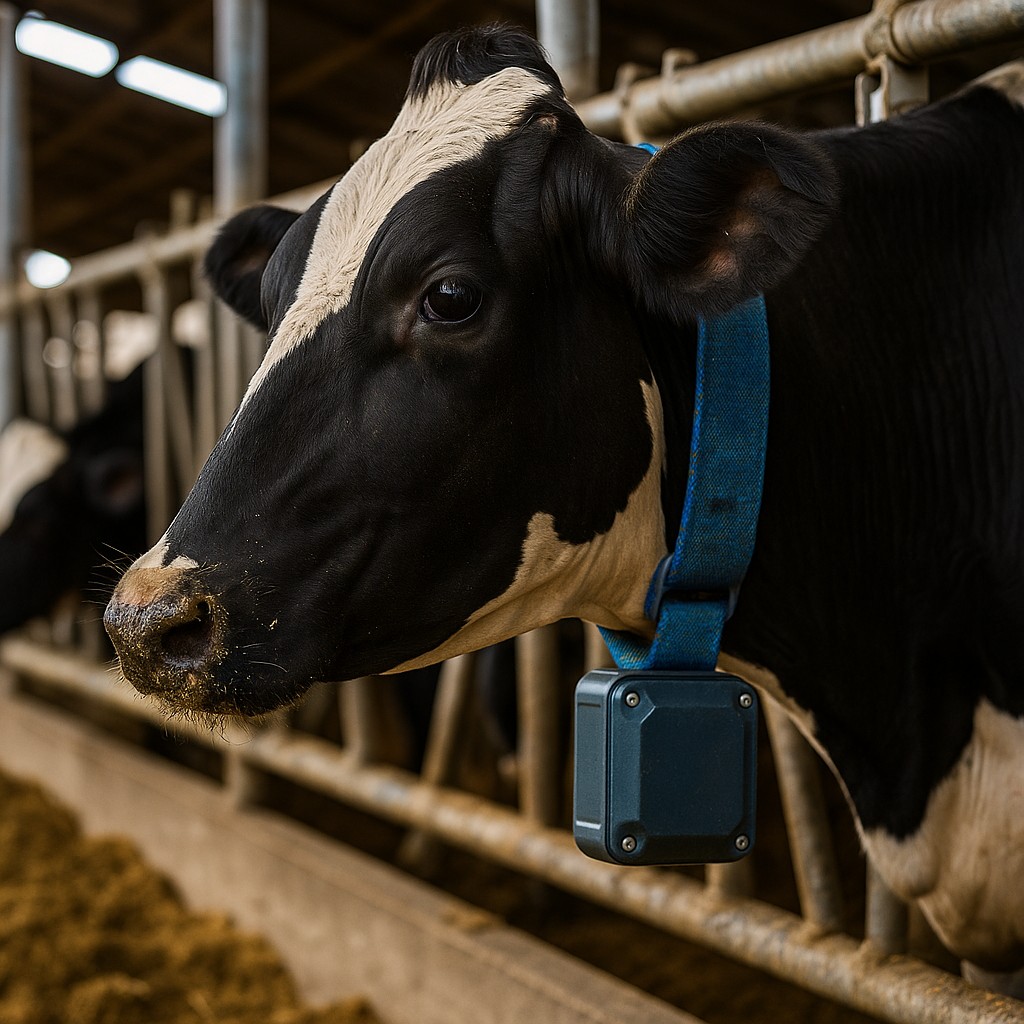
Emily pulled out her laptop and opened a page for FieldPulse Animal Insights, an ag-tech startup offering rugged monitoring collars and a simple phone app built for real barn work. The collars had a sturdy module attached; not sleek, not tiny, just barn-tough and reliable.
Most farmers in the testimonials said the same things: earlier heat detection, steadier rumination, fewer surprises.
Wyatt chimed in from over her shoulder. “Dad, look, these guys say it caught heats they’d been missing for months. It’s pretty simple. The collar tracks rumination and activity, and the app flags cows that look out of the ordinary.”
Tom watched the videos. He read a few farmer quotes. Nothing felt exaggerated. Nothing felt slick.
“It won’t replace what we do,” Emily said. “It just shows stuff earlier than any of us can see.”
Tom leaned back in his chair. “And you two really think this could help?”
Wyatt shrugged. “I think it’s worth trying. If we’re going to survive long-term, we’ve got to stop working by the seat of our pants.”
Tom looked at them both, the next generation of Homestead Ridge Dairy, trying to make things better. And the truth was, he didn’t have a better idea.
“Alright,” he said. “Let’s see what they’ve got.”
Two weeks later, the FieldPulse collars went on the first group of cows and the cows got used to them in less than a day. The app went on Tom’s phone and the old tablet in the milk house. Emily learned it first, then taught Tom the parts he needed.
“It’ll take a little time,” she said. “But it’s already reading.”
At first, Tom didn’t trust the alerts. But one morning, a cow flagged for low rumination. Tom walked over and watched her. She looked fine — or close to it — but something was off. By afternoon, she was showing clearer signs. They treated her early. She bounced back without a dip in the tank.
“That one got my attention,” Tom admitted.
A few days later, two cows popped up on the heat list, cows Tom wouldn’t have checked otherwise. Both bred on time.
“It wasn’t making decisions for us,” he said. “It was just telling us where to look.”
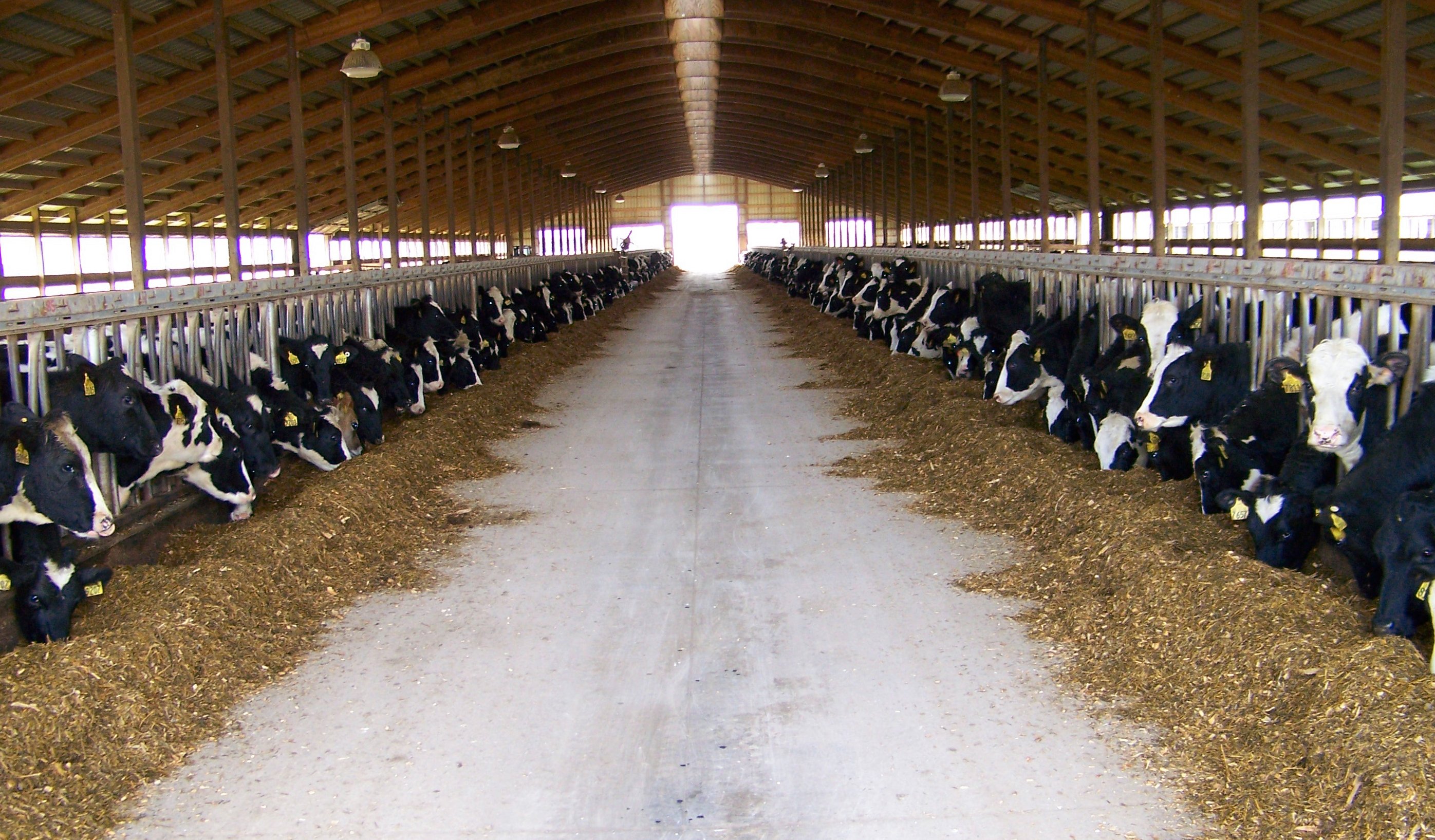
Within a few weeks, Tom felt a shift he didn’t expect: the barn was calmer. Not because the cows changed overnight, but because he finally had the information he needed before problems got loud.
“We weren’t chasing things anymore,” he said. “We were catching them early, staying ahead instead of being behind.”
The Kendricks never talked in terms of percentages or charts. They talked about how the work felt, the kind of results farmers measure day to day.
Heats stopped slipping through the cracks.
Alerts showed up early. Breeding stayed on schedule. Cows weren’t lingering open for weeks.
Sick cows were caught earlier.
Not emergencies. Not big dramatic saves. Just small catches early enough to matter.
“More than once, the app spotted a cow before I would’ve,” Tom admitted.
The barn routine steadied.
No more scrambling. No more surprises at milking. No more late-night checks unless they truly mattered.
“It felt like the herd finally settled down,” Emily said.
The workload felt lighter, without losing any standards.
Tom wasn’t walking the barn three extra times a day. Emily wasn’t sorting cows just to check them. Everyone felt a little less stretched.
“It didn’t take work away,” Tom said. “It just showed us where the work needed doing.”
And in the background, the numbers started behaving.
Milk steadied. Vet calls stopped creeping upward. Reproduction cycles tightened.
Not miracles, just better days, more often.
A few months later, Tom summed it up in the quiet, honest way farmers do:
“Turns out the kids were right. It wasn’t about technology. It was about finally seeing what we should’ve seen all along.”
Emily put it another way:
“It helped us help the cows sooner. That’s all we wanted.”
Today, Homestead Ridge Dairy isn’t perfect. No dairy ever is. But they’re no longer guessing their way through the herd. The fog has lifted. The work has rhythm again. And Tom has something he didn’t have before:
Confidence in the day ahead.
And if there’s one thing Tom would say to another farmer in the same spot?
“If you’re tired of reacting to problems you could’ve caught earlier, it’s worth taking a look at FieldPulse Animal Insights. We’re proof that it helps.”
A simple truth, earned the hard way: one cow, one day, one heat at a time.
Quiet proof pieces and practical articles for homestead and small-ranch brands.