See all Case Studies & Insight Articles
Quiet proof pieces and practical articles for homestead and small-ranch brands.
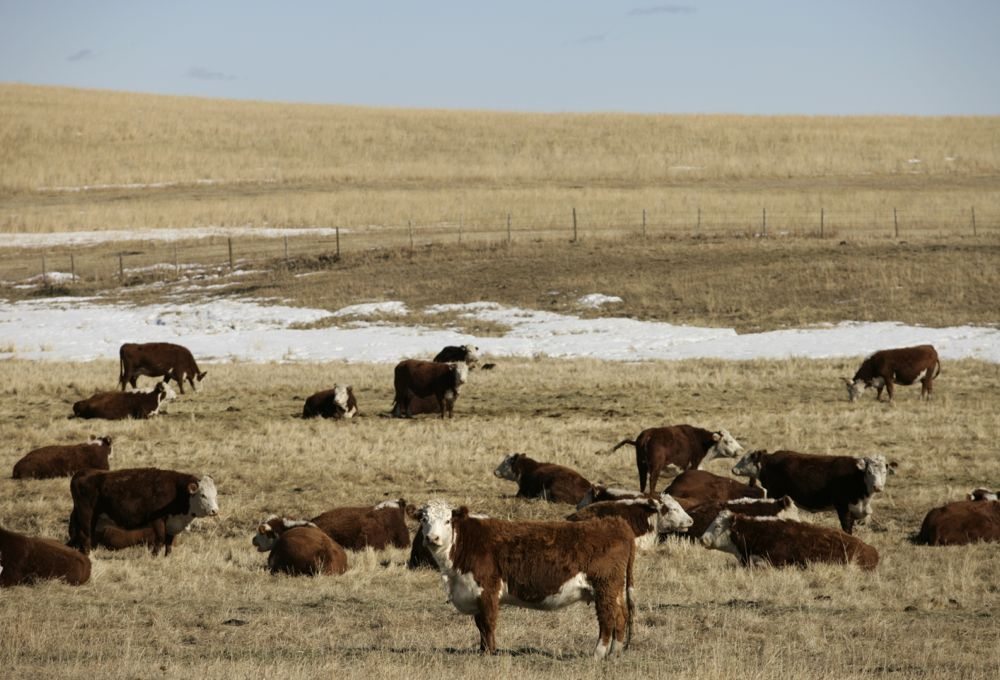
Most cattle can survive winter. That has never really been in doubt.
For generations, cattlemen have watched animals endure cold, snow, wind, and long stretches of hard weather. Cattle are built for it. And as long as the herd makes it through, the season is considered a success.
But survival is a low bar—and it tells us very little about what winter actually costs.
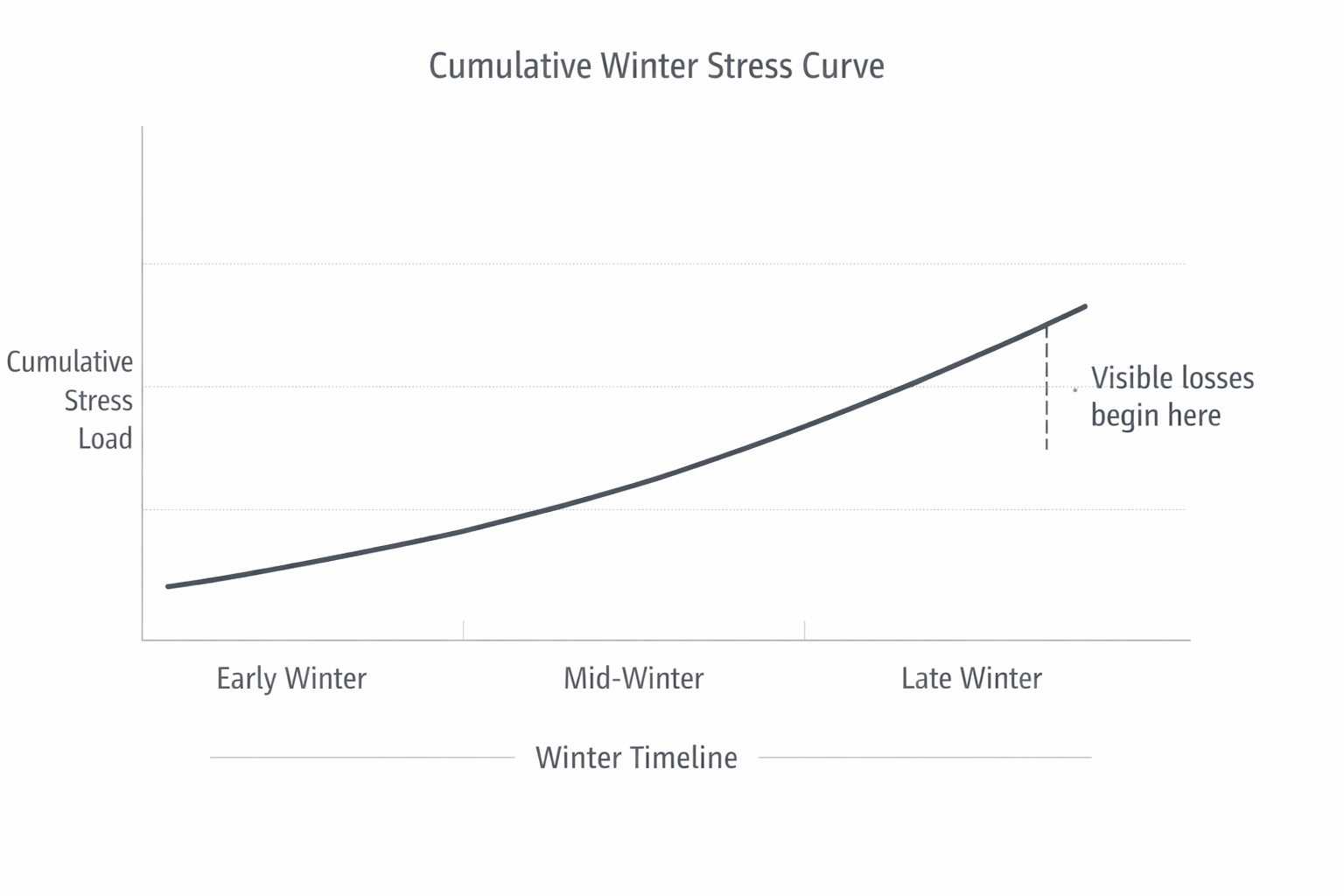
The real costs of winter rarely show up all at once. Lost intake, mild dehydration, stress-related fatigue, and reduced immunity can build quietly under the surface. By the time you see the evidence—weight loss, sickness, delayed breeding, or a sudden vet call—the underlying stress has usually been at work for weeks.
This is why winter stress is so expensive: much of it is invisible while it’s happening.
Large operations can absorb a certain amount of inefficiency. Losses spread across scale. A handful of cattle doing poorly doesn’t disrupt the whole system. Small herds don’t have that margin.
When you’re managing a limited number of animals, every weakness in the system shows up faster and hits harder. One cow losing condition becomes a real problem. One water breakdown becomes a chain reaction. One pen turning to mud creates ripple effects that don’t stop when the ground freezes again.
Winter rarely breaks cattle outright. What it does instead is erode them—slowly, quietly, and predictably. That erosion is what shows up later, on the scale and on the vet bill.
That is why winter management cannot be judged by survival alone. The real standard is function: maintaining condition, maintaining intake, and maintaining immunity, through long stretches of cold stress and system strain.
The sections that follow break down how winter stress actually works—how it accumulates, where it hides, and why small herd operators feel it sooner.
Cold stress is not dramatic. There is no alarm bell.
When temperatures fall, cattle do not suddenly collapse. They adapt. They keep eating. They keep moving. They keep functioning, which makes it easy to assume they are doing fine.
That adaptation carries a cost that is easy to miss while it’s being paid.
As cold exposure increases, cattle must expend more energy simply to maintain body heat. This rise in maintenance energy does not always show up immediately in behavior. They may still come to feed. They may still look “normal.” But their internal energy budget begins to tighten.
Cold exposure also changes how cattle use feed. More intake is required to achieve the same gain. More forage is used just to maintain the same condition. If intake drops for any reason—even briefly—the animal begins drawing down reserves.
This is why winter problems often show up later. The herd may look fine through much of the season while stress accumulates. Then, seemingly all at once, you see loss of condition, sickness, or poor performance. In reality, the stress was there the whole time—it just hadn’t crossed the line where it became visible.
For small operations, that line is crossed faster. The margin for error is smaller. And the cost of recovery is higher.
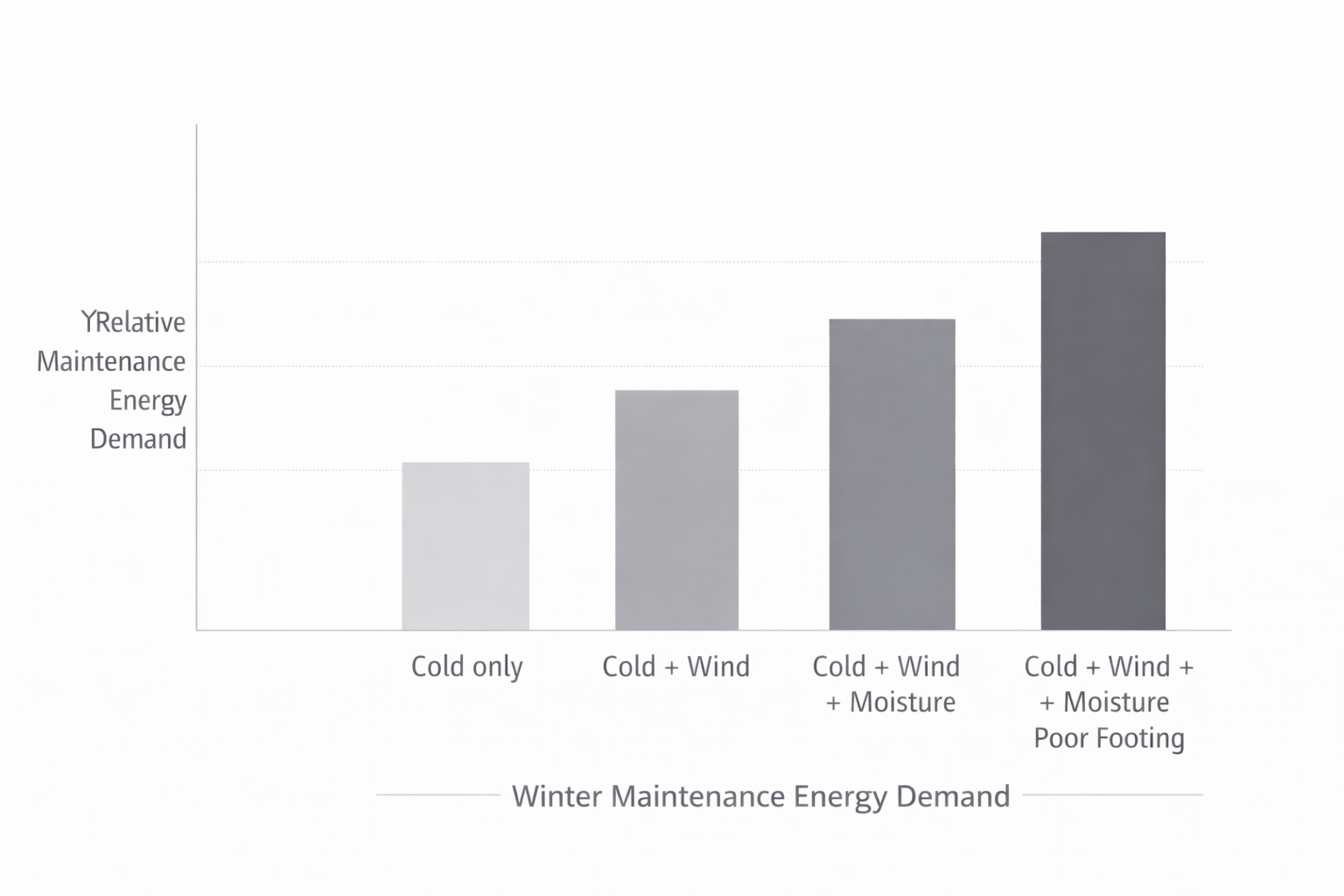
Cold air alone is something cattle are generally equipped to handle. What turns manageable cold into costly stress is the combination of environmental factors that disrupt insulation, movement, and energy balance.
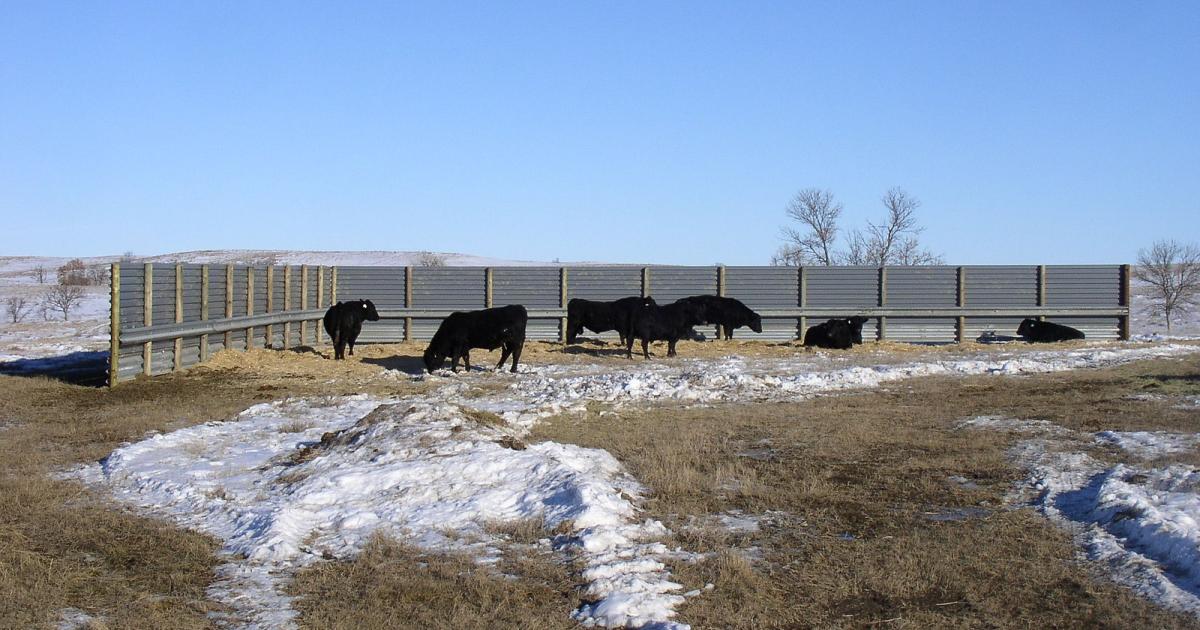
Wind is the first multiplier. A calm, cold day is far easier on cattle than a windy one. Wind strips heat away and forces cattle to maintain a stable layer of warm air around their bodies. The thermometer may not change, but the animal’s energy demand does.
Moisture compounds the loss. Wet hair coats lose insulating value, forcing cattle to burn more energy to maintain body temperature. When animals must lie down or stand in wet conditions, the stress becomes continuous. What might have been a tolerable condition becomes a steady drain.
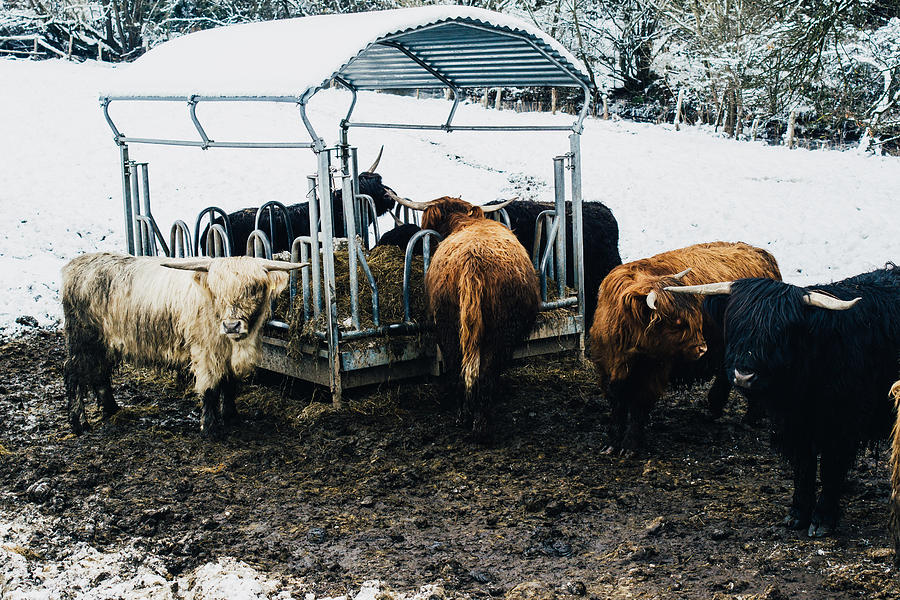
Footing adds a third, often underestimated, layer of stress.
Standing in deep mud increases fatigue and reduces time spent lying down, which is one of the most important winter energy conservation behaviors. If cattle are forced to remain standing or constantly shifting their weight, they burn energy that could otherwise support maintenance, immunity, or recovery.
This is where winter systems either help cattle or quietly work against them.
Cattle that are constantly repositioning to escape wind, find dry footing, or access feed are spending energy just to exist. That energy comes from somewhere, and it is almost always pulled away from productive functions and toward basic survival.
The most dangerous part is how ordinary this looks. Mud is common. Wind is constant. Wet bedding happens. These conditions don’t seem like emergencies. But they create cumulative pressure that shows up later as poor gains, late calving, or health problems that seem disconnected from their cause.
For small herds, these losses are harder to absorb. One cow struggling is not balanced by another doing exceptionally well.
Winter doesn’t steal energy all at once. It takes it in layers—temperature, wind, moisture, and footing—when those layers are allowed to overlap unchecked.
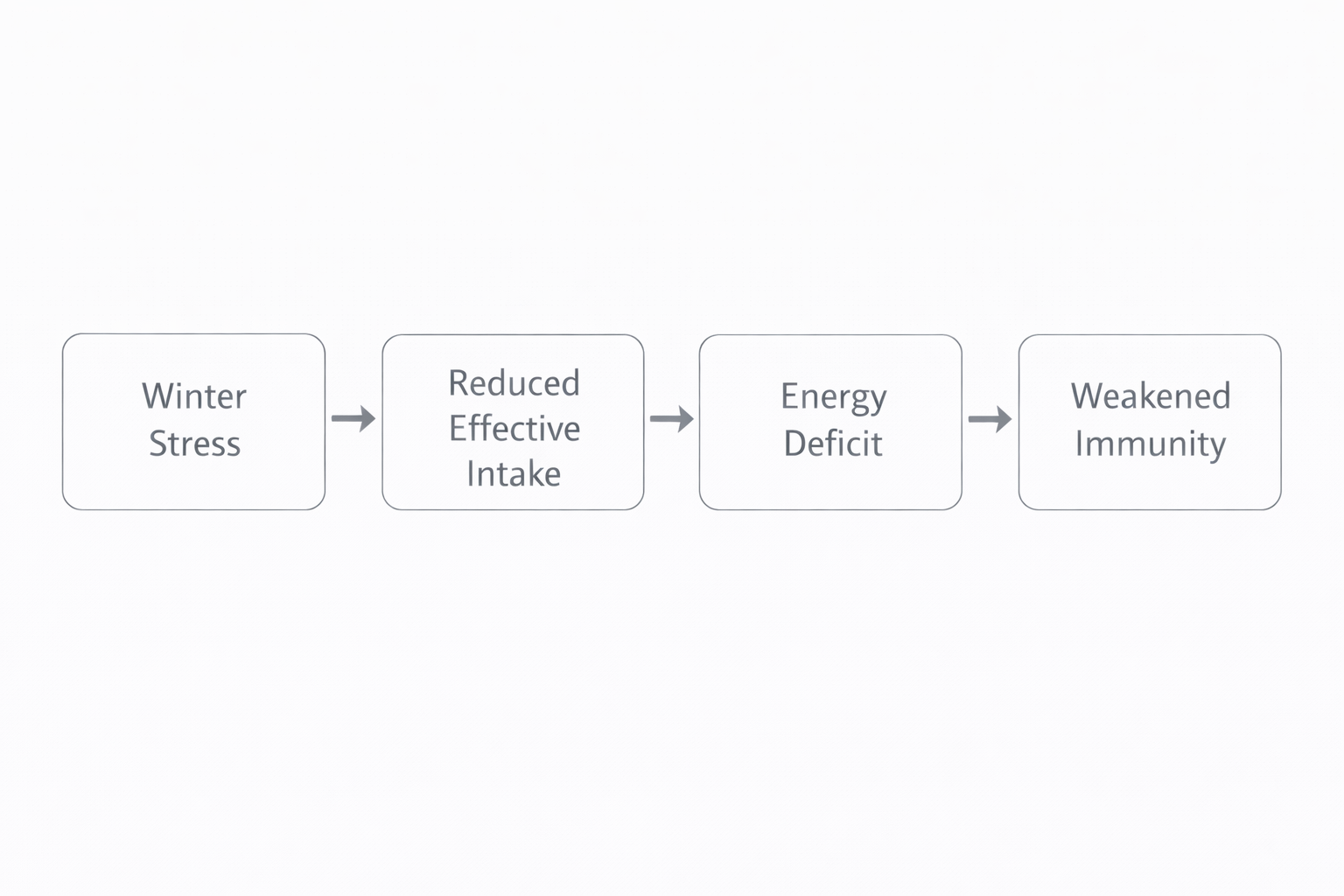
Winter stress rarely acts alone. It sets off a chain reaction that begins with energy demand and ends with health problems. And once the chain begins moving, it tends to carry forward unless something interrupts it.
Cold exposure raises energy requirements. That means cattle must eat more to maintain condition. But the same stress factors that raise energy demand also reduce intake. Wind, mud, frozen feed, and limited access to water all reduce how effectively cattle eat and drink.
This is where problems begin to compound.
When energy demand rises and intake fails to rise with it, cattle begin drawing down reserves. That is the first stage: condition loss. But if the imbalance persists, the immune system is next to be shorted.
This does not mean cattle immediately get sick. More often, it means their margin for error disappears.
Minor challenges that would be shrugged off in warm weather become costly in winter—not because they are new, but because they have been operating under sustained strain.
This delayed effect is one of the most misunderstood aspects of winter health.
Producers often associate illness with the moment it appears—January pneumonia, February scours, late winter reproductive issues. But the weakness often begins weeks earlier, while cattle were still functioning and appearing normal.
That delay makes the connection easy to miss.
Water is one of the most overlooked drivers of winter stress, especially in small operations.
When winter stress is invisible, water is often treated as a basic checklist item: the tank is “not empty,” the heater is “still running,” the trough is “not frozen.” But water is not just an access issue. It is a performance issue.
Cattle that do not drink enough do not eat enough. And cattle that do not eat enough cannot keep up with winter energy demand.
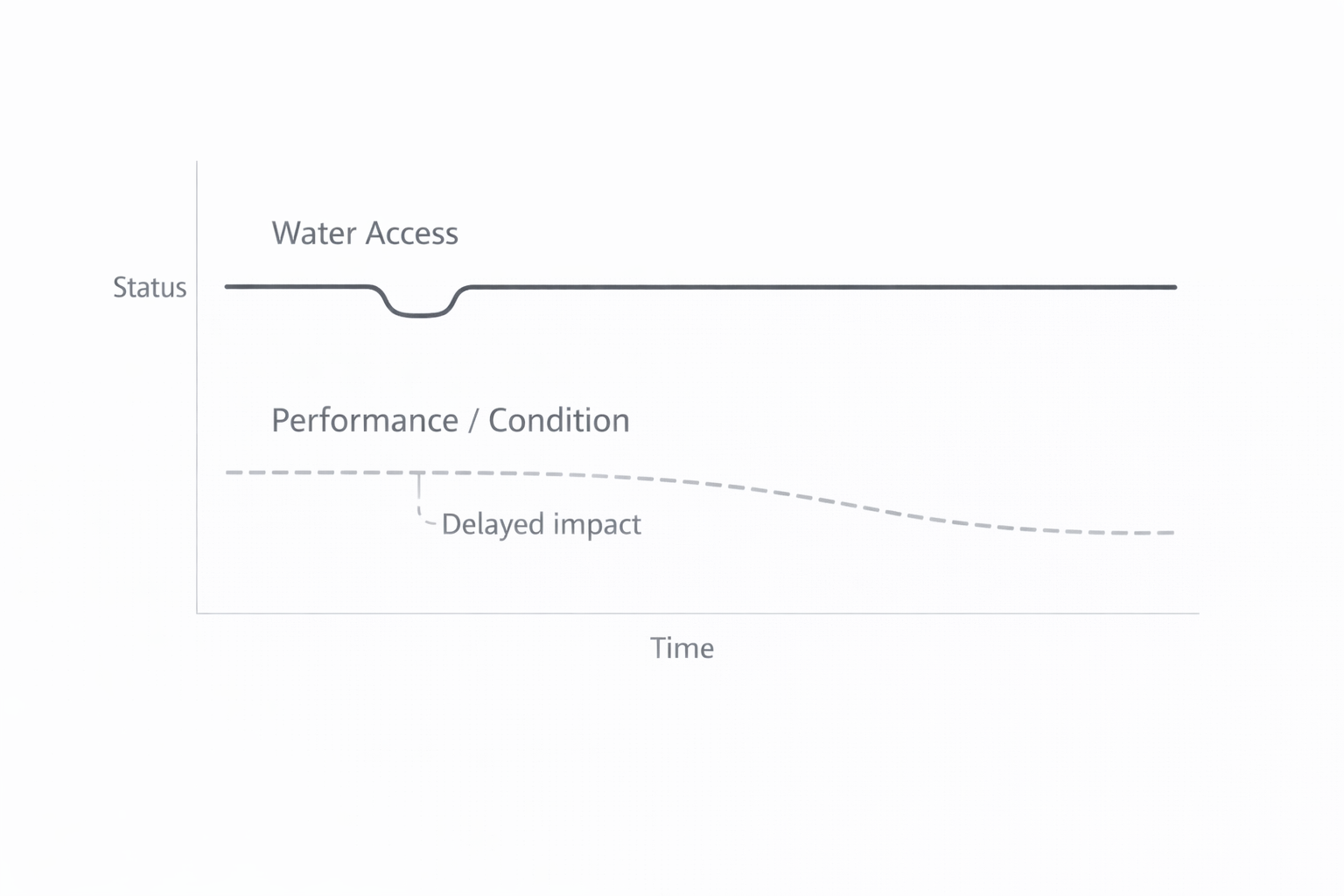
Winter water problems are rarely total shutdowns. More often, they are short disruptions—ice buildup, low flow, a heater failing overnight, an animal being pushed off access in a tight pen.
These disruptions often seem small. But in cold weather, the effects compound.
If cattle drink less for even a short window, intake drops. When intake drops, energy balance shifts. And once energy balance shifts in winter, recovery is slower than most producers expect.
That is why water problems show up later.
Producers often fix the trough and assume the problem is solved. But the disruption already occurred. The stress already accumulated. Condition loss may not show up until days later. Gains may lag. Health problems may emerge when cattle reach a point of reduced immunity.
This is why winter water systems must be judged by consistency, not by whether they “work most of the time.”
In winter, “most of the time” is not good enough.
For small herds, water is one of the simplest leverage points you have. If you treat it as a performance factor, not just a box to check, you reduce stress across the whole system.
Some of the most expensive stress is created by the way cattle are managed when conditions are already working against them.
Winter reduces tolerance. What cattle handle easily in October becomes harder in January once cold stress, footing, and energy demands are layered on top. Small disruptions that barely register in summer can have outsized effects in winter.
Inconsistent routines are a common example. Changes in feeding times, frequent pen changes, or shifting access to shelter force cattle to stay alert when they should be resting. That alertness burns energy. It also reduces rumination and settling behavior. Over time, these small inefficiencies add up.
Handling matters more in winter as well. Rushing cattle, unnecessary sorting, or crowding cattle tightly during cold weather increases stress hormones and disrupts intake patterns. These effects ripple forward, affecting intake and behavior for days afterward.
Overcrowding is another quiet contributor. When cattle are crowded tightly, they can’t choose dry resting areas, they compete harder for feed and water, and lower ranking animals often eat less than they should. In winter, those dynamics become more costly because energy reserves are already under pressure.
The most efficient winter systems are often the calmest ones.
They provide consistency in feeding and watering.
They minimize unnecessary movement and disruption.
They reduce overlapping stress factors so cattle can conserve energy instead of constantly reacting to their environment.
Small herds benefit from this more than anyone else, because every animal matters.
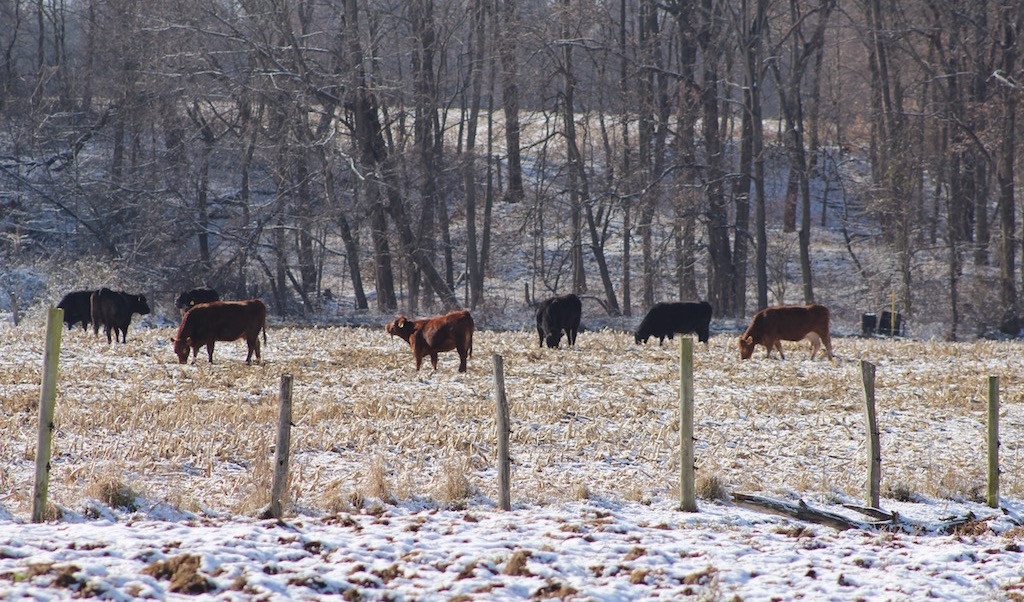
They do not look impressive. They do not look dramatic. In fact, the best-performing cattle in January often look unremarkable, and that is precisely the point.
Movement is the first signal. Healthy cattle move calmly, deliberately, not nervously. They stand up, walk to feed or water, and settle again without tension.
Resting behavior matters just as much. Cattle that lie down and stay down are conserving energy. They are ruminating. They are comfortable enough to recover.
Healthy cattle also maintain consistent intake patterns. They come to feed steadily. They do not hover or pick. They do not show the restless, shifting behavior that often indicates discomfort, cold stress, or poor footing.
Body condition is another indicator, but it must be interpreted correctly. Condition does not always drop quickly, even under stress. What matters is trend. If condition is gradually slipping over the season, it signals stress accumulation, not a sudden failure.
For small herd operators, watching these signals is critical. Healthy cattle are not just “alive.” They are stable. They are conserving energy. They are maintaining intake. And they are protecting immunity.
That is what winter success looks like.
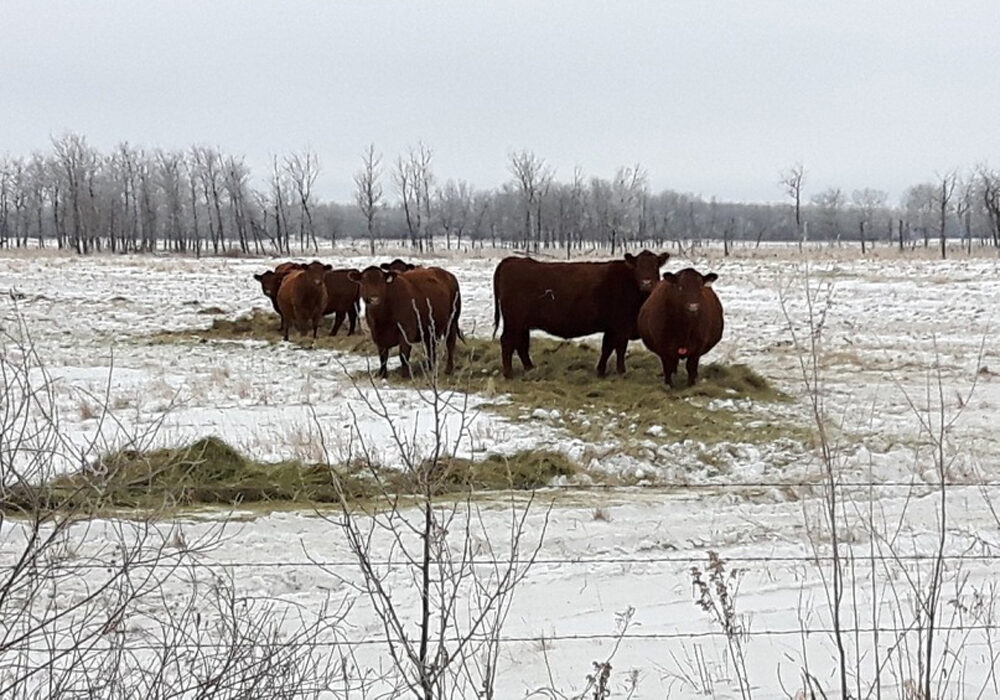
Cold weather does not suddenly introduce new problems into a cattle operation. What it does is remove the margin that hides small inefficiencies the rest of the year.
This is why winter problems often feel abrupt, but they are not. The weakness was already there. Winter simply applied pressure long enough for the weakness to show.
Shelter that is marginal in fall becomes inadequate in January. Drainage that is tolerable in dry weather turns costly when pens become mud. Feeding systems that work “well enough” in mild weather begin to break down when intake needs rise and cattle cannot access feed consistently.
This is why winter stress is so often misunderstood. People look at weather and assume it is the cause. More often, weather is the trigger. The real cause is system design.
Small herds have less room for error, but they also have more visibility. You see the cattle up close. You see patterns in behavior. And you can often make small changes that remove the largest stress points.
Strong winter operations tend to look unremarkable from the road. That is usually a sign the systems are doing their job. Weak winter operations tend to look “busy,” reactive, and constantly in repair mode. That usually signals that stress has already accumulated too far.
Winter does not reward toughness for its own sake. It rewards discipline.
In that sense, winter is not the enemy. It is the test.
And like most good tests, it does not care what you intended—only what your systems can actually sustain.
If you want help turning real-world proof into clearer messaging, send me a note.
Ken Whaley
Copywriter for Ranch, Homestead & Rural-Supply Brands
Quiet proof pieces and practical articles for homestead and small-ranch brands.